Geometry-Guided Robotics
Geometry-driven robotic surface treatment combining 3D reconstruction, operator-guided paths and haptic interaction.
- Collaborative robotics
- Surface processing
- 3D reconstruction
- Haptic interaction
Overview
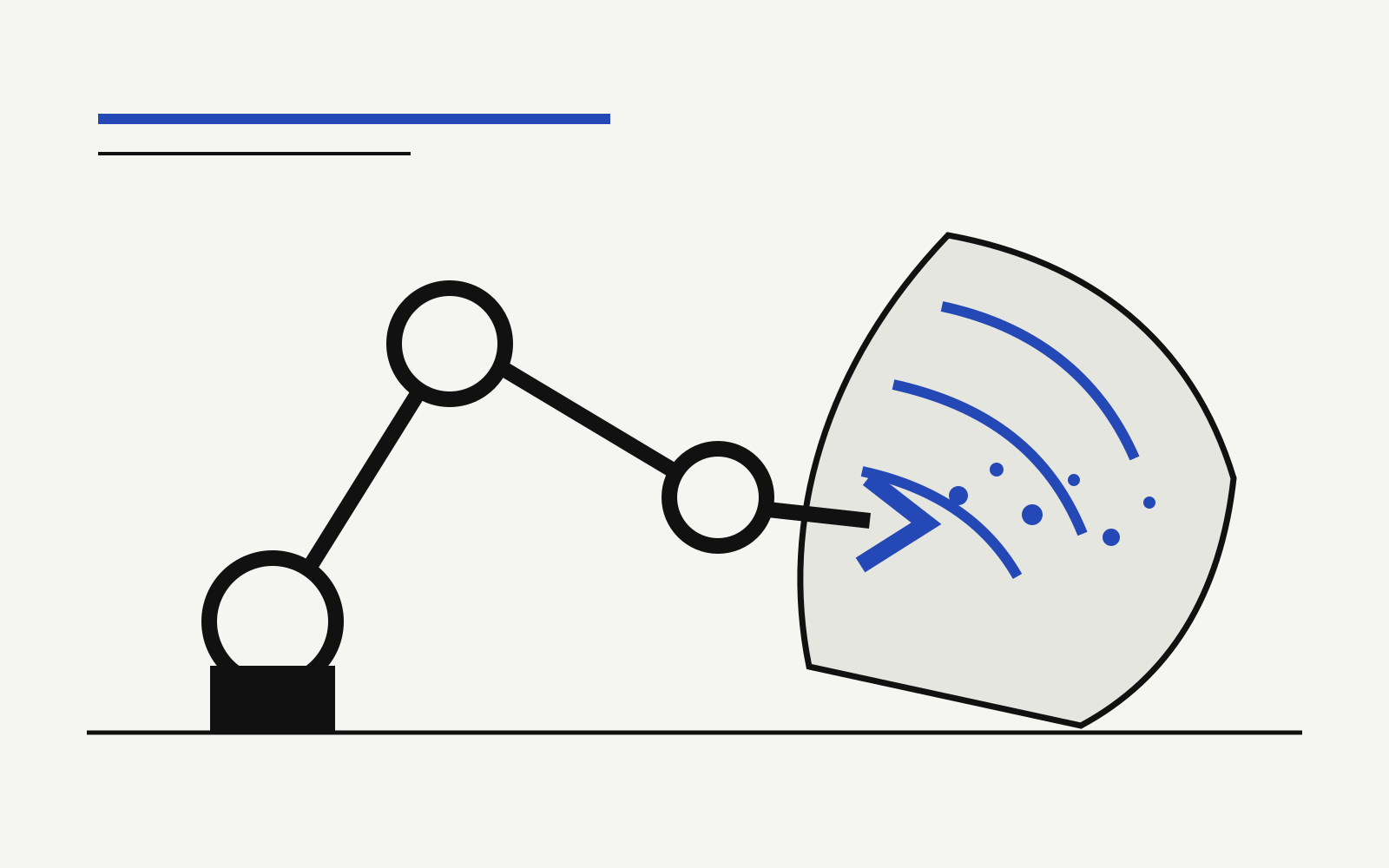
LABROID — Leverage Abrasive Blasting by Robotic Intelligent Devices — explored robot-assisted abrasive blasting in which the operator defines a treatment on a digital representation of the actual workpiece. The engineering focus was the connection between 3D acquisition, surface-related path definition and robot motion.
The consortium combined SUPSI’s research and control development, AeroSpline’s cell and digital-environment work, and Safran Helicopter Engines’ process expertise as end user. I participated as a member of the SUPSI-ISEA project team.
This case study draws on the supplied SUPSI technical report, covering development during 2021 and up to February 2022. It describes the laboratory demonstrator and documented methods, not the platform’s current commercial status.
Challenge
Abrasive treatment depends on the part’s shape, placement and selected treatment areas. For small-series and repair work, a usable CAD model may be unavailable, and a fixed robot program cannot by itself accommodate changes in geometry or placement.
The challenge was to turn observations of a workpiece into geometry that an operator could use to define nozzle motion, while keeping tool orientation, stand-off and robot feasibility connected.
Approach
The workflow separates four responsibilities:
- Acquire: associate depth-camera observations with the robot pose at each viewpoint.
- Reconstruct and locate: filter points, align overlapping views, create a surface mesh and register the workpiece against a reference.
- Define treatment: use haptic input or selected points to describe a path relative to the surface.
- Prepare motion: interpolate the path, solve inverse kinematics and communicate motion commands to the robot.
Separating device interfaces from geometry and application logic allowed synthetic camera data and robot simulation to support development before full hardware integration.
Implementation
From depth frames to a usable surface
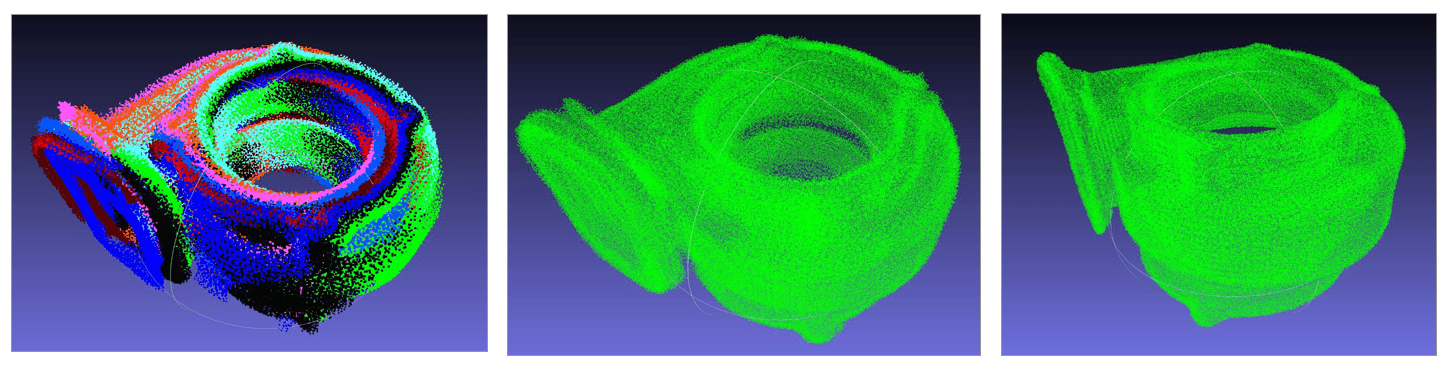
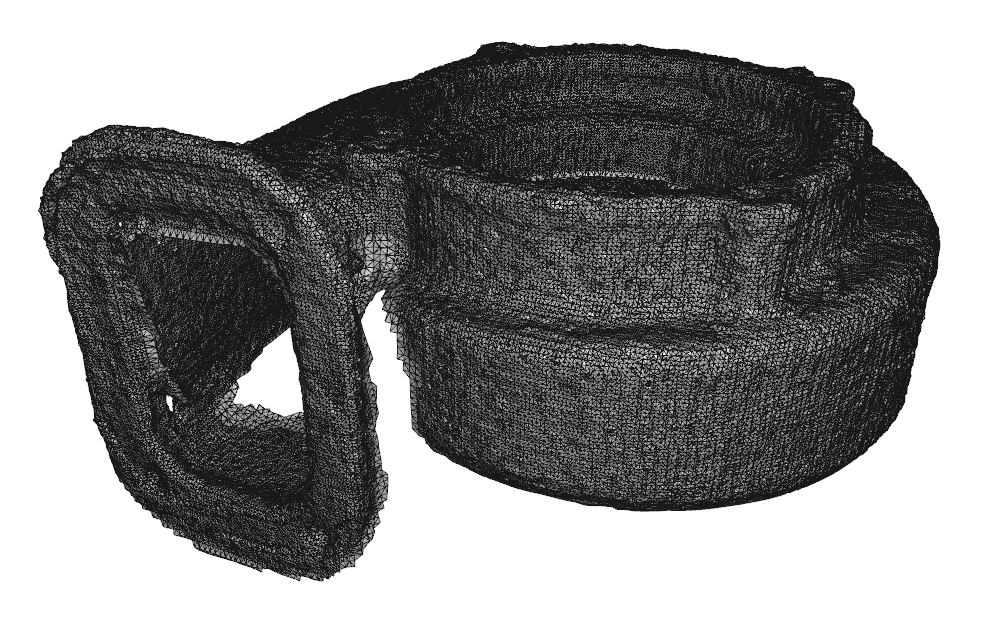
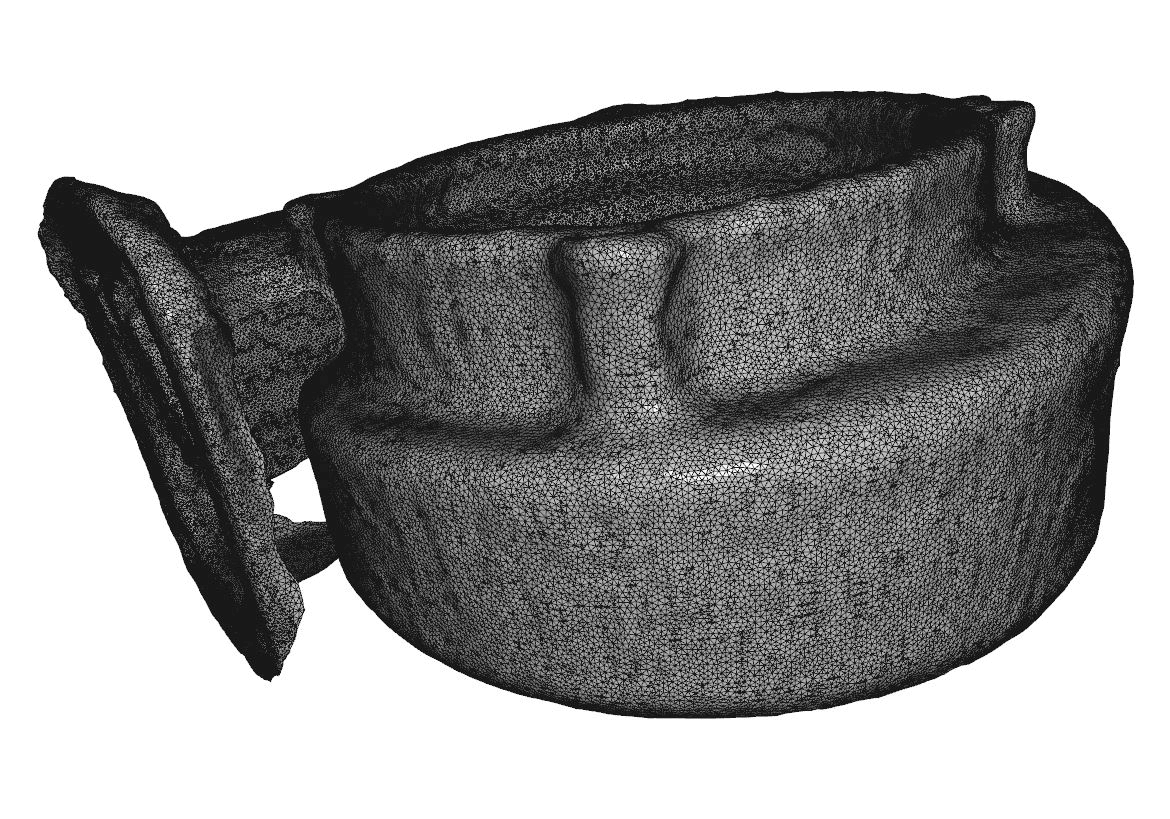
The physical acquisition setup used a robot-mounted Helios2 time-of-flight camera. The reconstruction chain combined spatial filtering, voxel reduction, normal estimation, iterative closest point (ICP) registration and Poisson surface reconstruction.
Robot-pose information provided an initial placement of the observations; registration refined their overlap. Normal orientation used the camera viewpoint. The resulting mesh provided a common reference for visualisation and treatment definition.
Surface-aware paths and haptic interaction
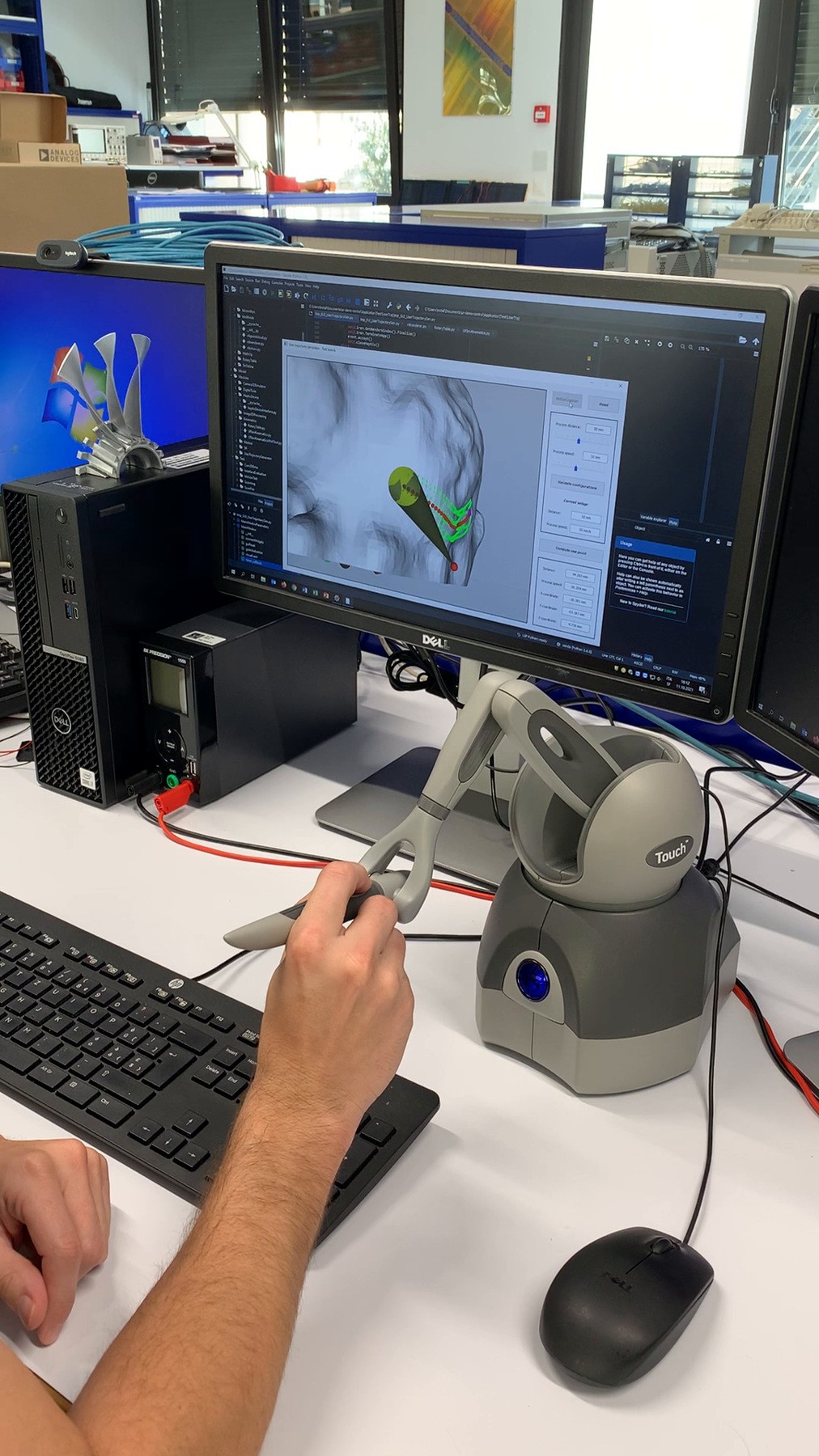
Haptic teaching and point-to-point definition were reported as implemented methods. A 3D Systems Touch device supplied operator input and force feedback, with integration of position measurement, spring response and vibration effects.
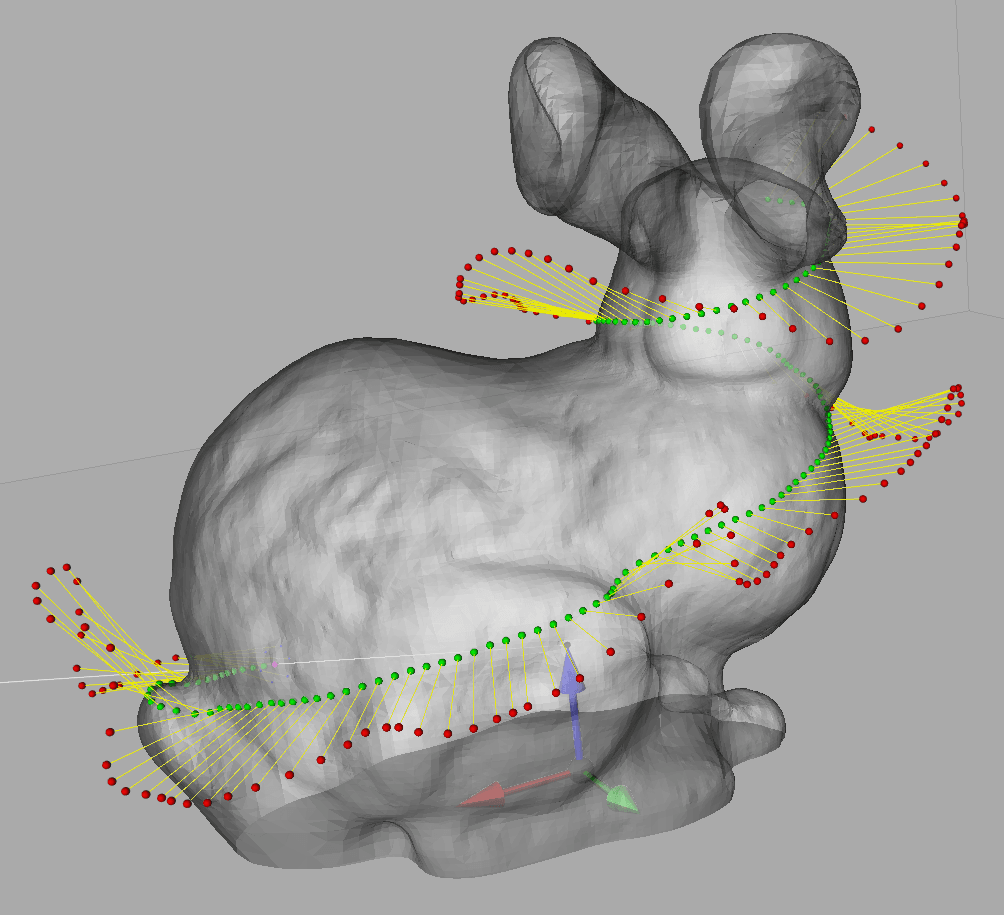
The path method queried mesh intersections using rays over a representation of the jet footprint. Local surface normals informed tool direction, and a configured stand-off placed the tool away from the surface. Interpolation balanced closer geometric following with smoother motion.
Connecting the path to robot motion
Integration work included Python inverse kinematics, camera-to-tool transformations and trials in the Universal Robots simulator. Motion-service development addressed joint and Cartesian commands, trajectory execution and the separation of robot updates from slower operator input.
The public project video complements these selected laboratory and geometry-processing images.
Results
The strongest documented outcome is the progression from synthetic and physical acquisitions to aligned point clouds and reconstructed surfaces. Further examples show reference-to-observation registration, surface-related paths, interpolation and laboratory haptic interaction.
These are useful engineering capabilities for geometry-driven robot programming. They do not by themselves establish blasting quality or acceptance of a complete production system.
The funded ARIS project period remains 14 January–31 December 2021; the technical account includes follow-up material through February 2022.
Publications / Links
Technical source: LABROID — Robotic surface treatment: Development and demonstrated results, SUPSI, scope dated February 2022. Selected photographs and figures are reproduced from the project material supplied for this portfolio; the full report archive is not distributed here.