Task-Constrained Robotic Path Planning
Projection-based B-spline planning that preserves collision avoidance while enforcing implicit robotic task constraints.
- B-splines
- Motion planning
- Implicit constraints
- Robotics
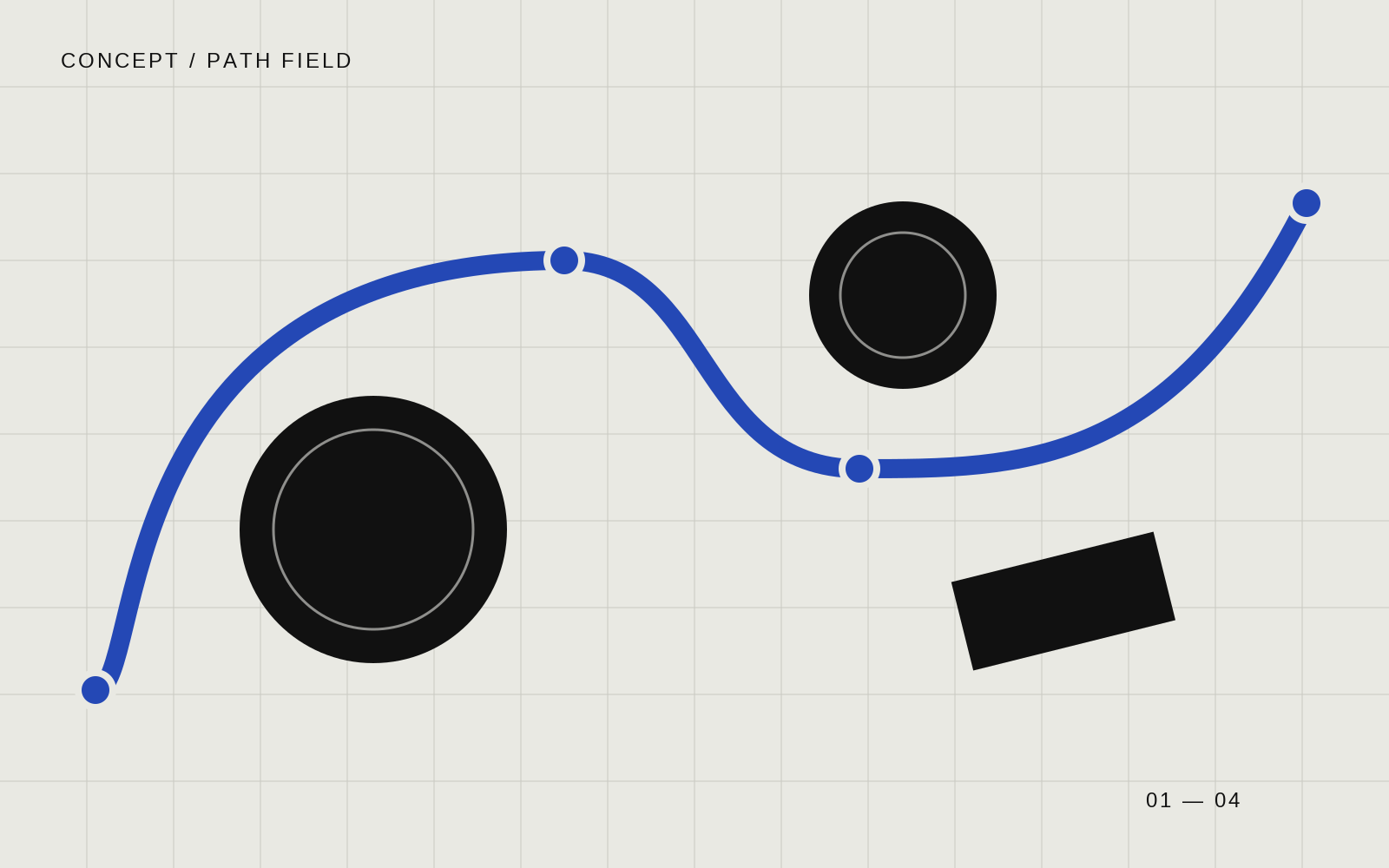
Overview
This research develops smooth, collision-free B-spline paths subject to implicit task constraints. I co-authored the paper with Marco Riboli, Riccardo Abbati, Alessandra Aimi, Alessandro Tasora and Marco Silvestri. The journal article is published in Mechatronics, volume 120, article 103603.
Challenge
Collision avoidance alone does not guarantee that a robot follows a required surface or maintains a task relationship. Smoothing must preserve these constraints along the continuous path, not only at sampled waypoints.
Approach
The path is represented as a B-spline with control points and basis functions :
Task constraints define an implicit manifold. A projection stage enforces the prescribed tolerance at the control points, and an outer refinement loop increases the knot count until the complete path satisfies the requested adherence tolerance.
Implementation
The method connects safe-corridor optimization with constrained closest-point projections and an alternating-projection smoothing step. The paper evaluates the resulting paths in simulation and real-world robot experiments.
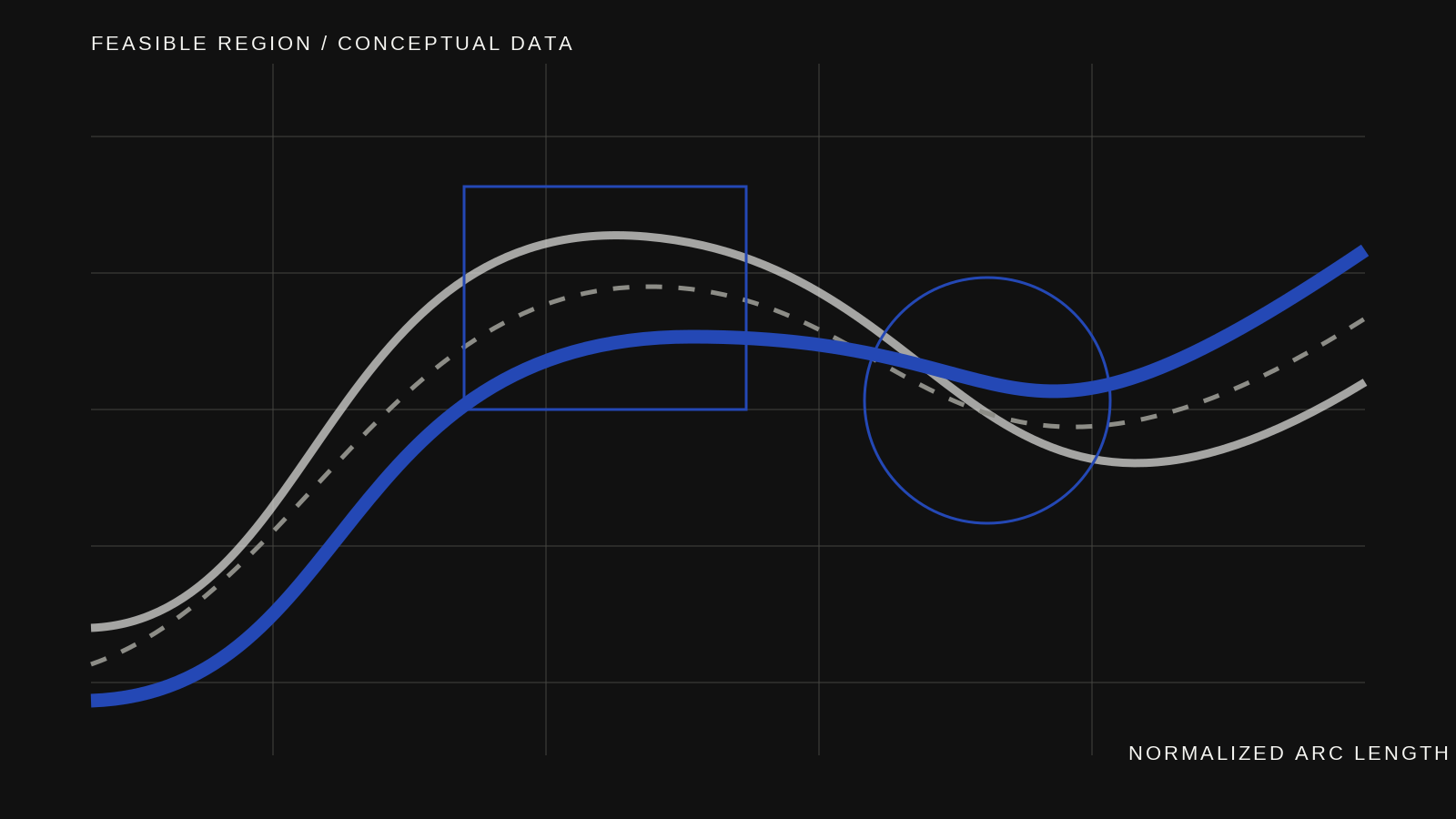
Reading. This schematic introduces the planning problem. The journal article contains the research methods, experiments and results.
Results
The article reports simulation and experimental validation of the projection-based planning method. The diagram above is an editorial illustration; it does not reproduce an experimental result.